Compare with 1 courses
DP-750 — Databricks Data Engineer

DP-750 — Databricks Data Engineer

Learn how to design, build, and manage scalable data pipelines using Azure Databricks to support analytics, machine learning, and AI-driven applications.

₹15999

Learn more
Has discount
Expiry period Lifetime
Made in English
Last updated at Thu May 2026
Level
Intermediate
Total lectures 12
Total quizzes 0
Total duration 0
Total enrolment 0
Number of reviews 0
Avg rating
Short description Learn how to design, build, and manage scalable data pipelines using Azure Databricks to support analytics, machine learning, and AI-driven applications.
Outcomes
  • Learn how to design and build scalable data engineering solutions using Databricks, Apache Spark, and cloud-based analytics platforms.
  • Gain hands-on experience in creating automated data pipelines for batch processing, streaming data, and real-time analytics workflows.
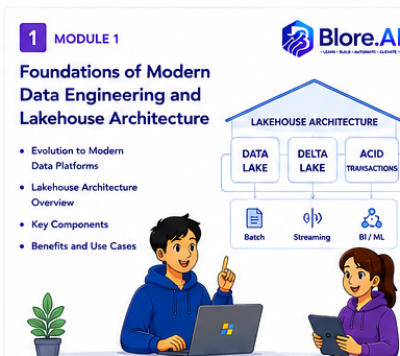
  • Understand how to work with Delta Lake, data lakes, data warehousing, and modern data architecture for enterprise environments.
  • Explore data transformation, ETL/ELT processes, data integration, and optimization techniques for high-performance big data processing.
  • Learn to manage structured and unstructured data using Databricks notebooks, Spark SQL, PySpark, and distributed computing concepts.
  • Implement data governance, security, monitoring, and performance tuning best practices for reliable and scalable data platforms.
  • Develop industry-ready skills for careers in Data Engineering, Big Data Analytics, Cloud Data Platforms, AI Data Pipelines, and enterprise analytics solutions.
Requirements
  • Basic understanding of databases, SQL, and data processing concepts
  • Familiarity with programming fundamentals; knowledge of Python or Scala is beneficial
  • Basic knowledge of cloud computing and modern data platform concepts is an advantage
  • Understanding of ETL/ELT workflows, data integration, or analytics processes is helpful
  • Prior exposure to Apache Spark, data lakes, or distributed computing concepts is beneficial but not mandatory